Remove the stuck-on mirror tiles
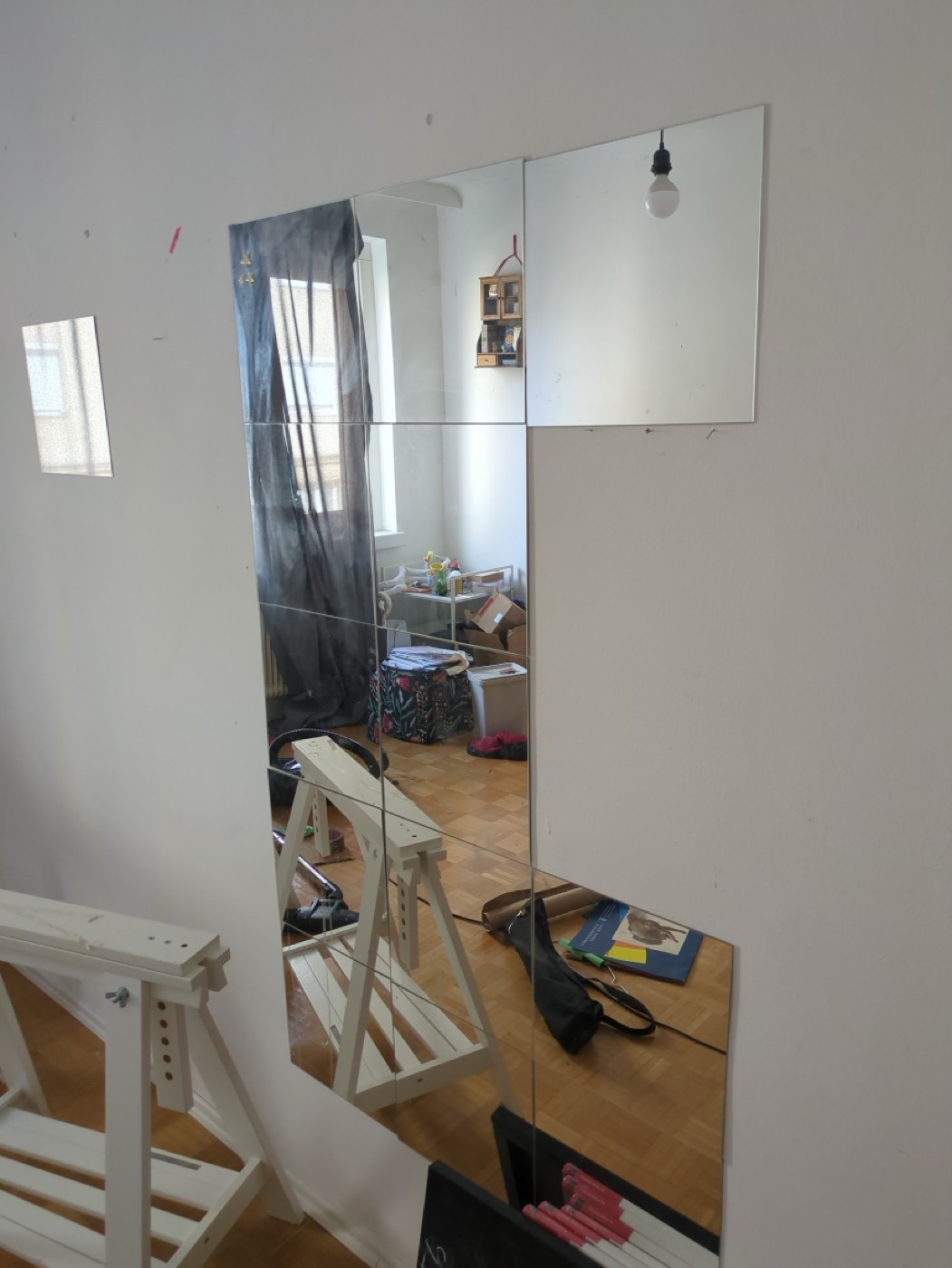
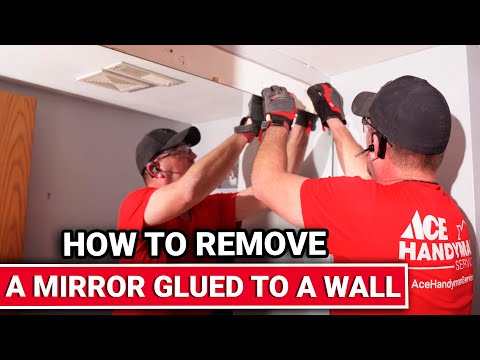
Floss / fishing line saw
Put on gloves + eye protection, tape an X of masking tape across each tile (holds shards if it cracks). Slide dental floss or fishing line behind the top edge and "saw" downward through each foam pad. Have a second person hold the tile.
Heat + floss
Warm the tile with a hairdryer on high for 1–2 minutes (keep it moving). Heat softens the foam adhesive, then repeat the floss saw. Works on almost everything. ▶ See the carousel videos up top.
Shims + patience (the pro method)
Tap thin wooden shims (or a stack of plastic spatulas) behind the corners, a little at a time, working around the tile. Let the adhesive release slowly. Put a padded box/blanket below in case it drops.
Foam pads & adhesive residue left on the wall
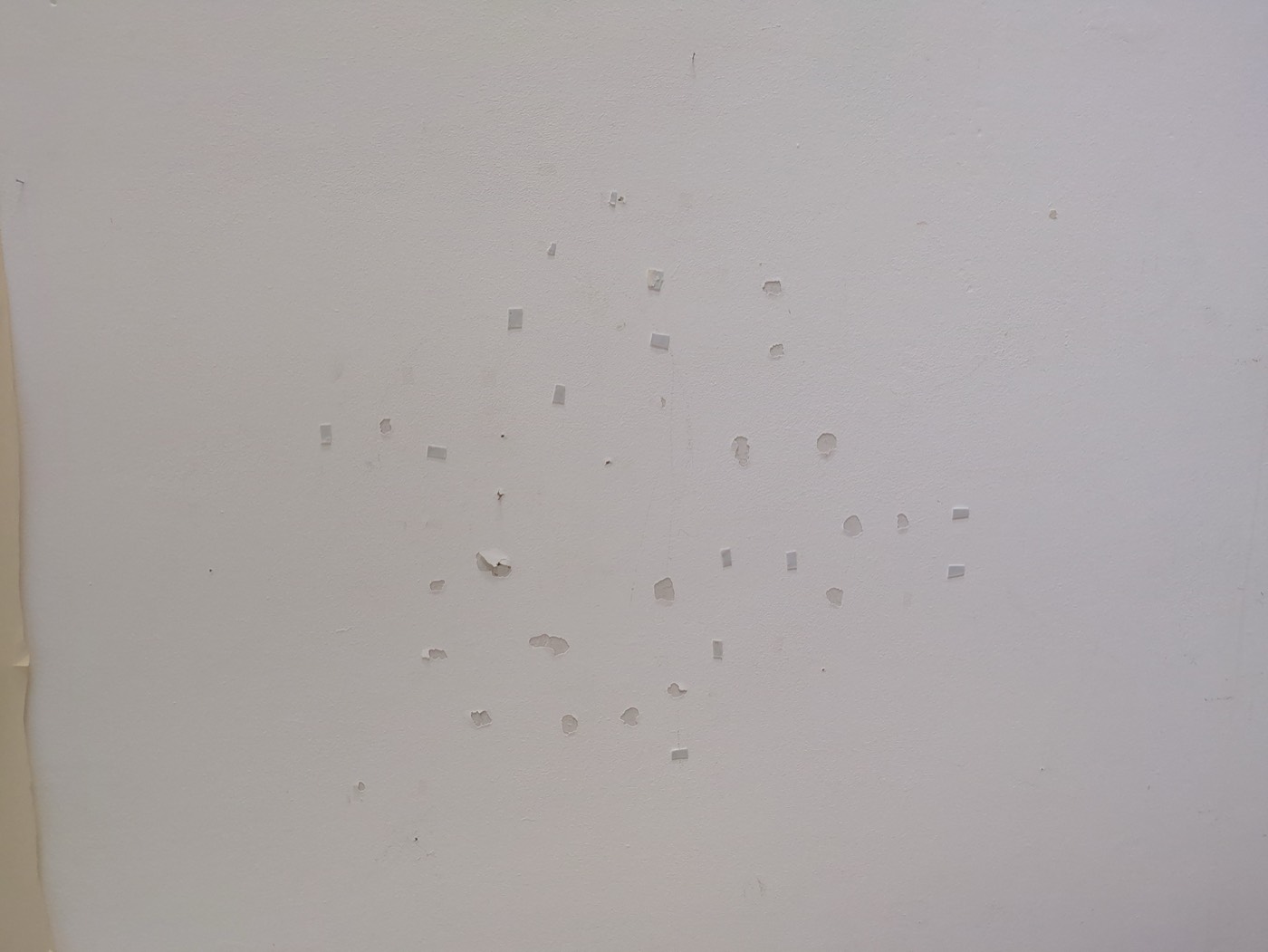

Roll it off with your thumb
Rub the pad edge with your thumb so it rolls into a ball, or twist it off slowly. Pull remaining pads parallel to the wall (stretch sideways), never straight out — straight pulls take paint with them.
Hairdryer + plastic card
Warm each pad 20–30 seconds with the hairdryer, then push it off with an old bank card or plastic scraper held almost flat against the wall.
Oil or citrus adhesive remover
Dab a little cooking oil or citrus remover on a cloth, hold it on the residue for a minute, then rub off. Spot-test first — oils can leave a shadow on flat paint. Wash after with warm soapy water.
Leave it for the paint phase
Scrape flat and stop — don't keep scrubbing or you'll enlarge the damage. Any bare or shiny patch gets filled, sanded and painted over in Phase 2.
Scuffs, dirt shadows & yellow-ish stains
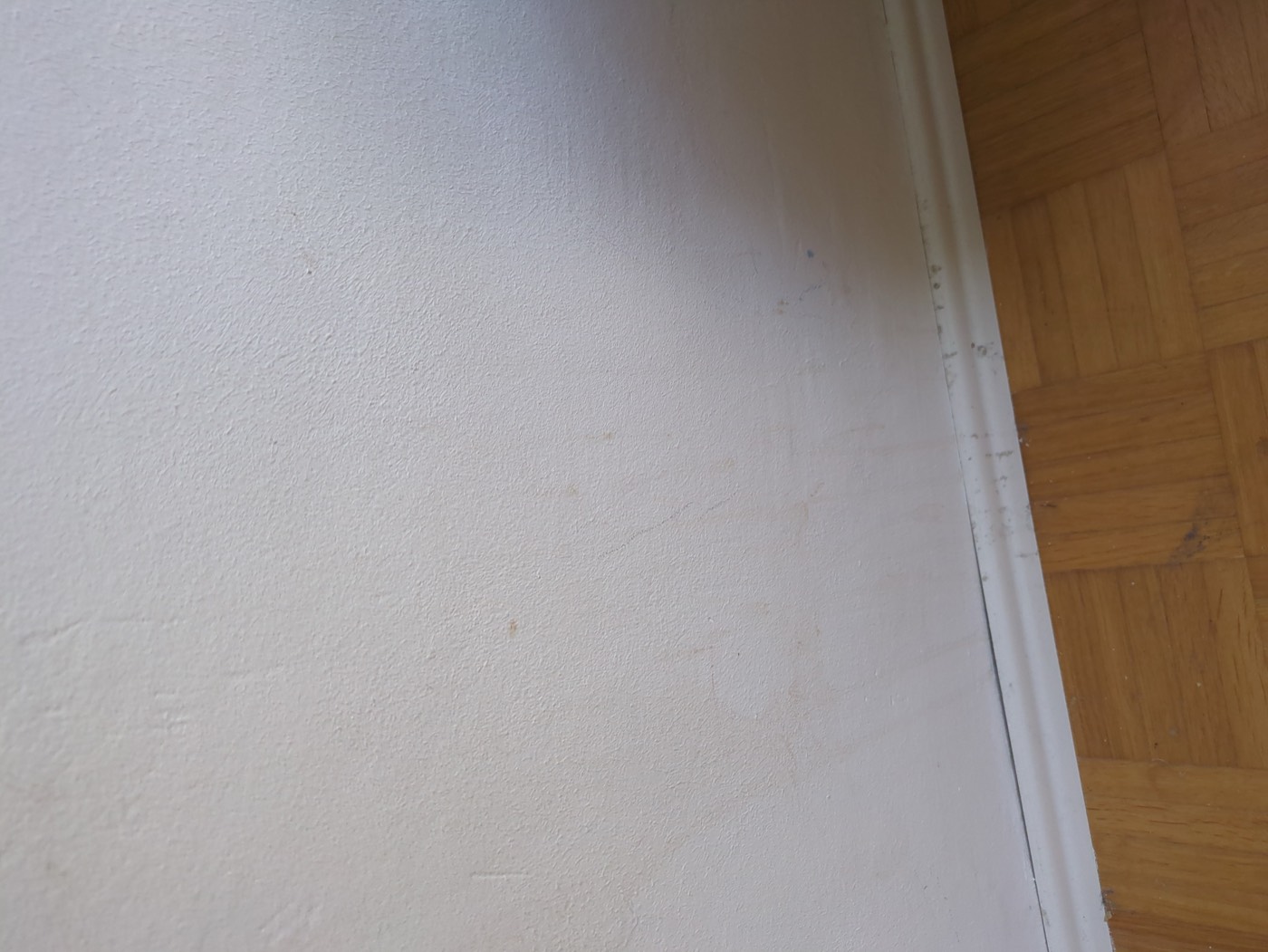
Dry wipe → soapy water
Dry microfibre cloth first (removes loose dust that would smear). Then warm water + a drop of dish soap, wring the cloth well, blot and wipe gently. Rinse-wipe with clean water, pat dry.
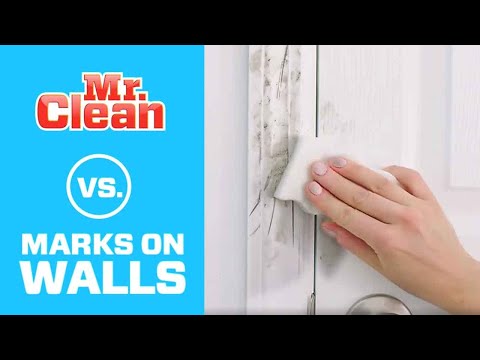
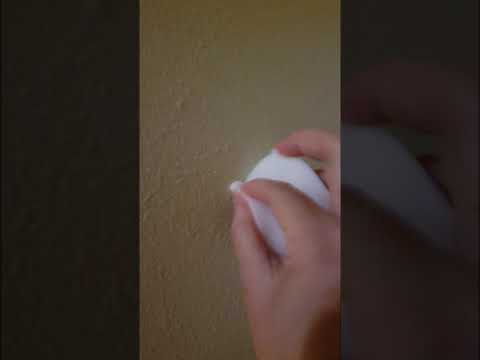
Melamine sponge (Magic Eraser), lightly
Wet the sponge, squeeze out, and rub the mark gently — it's micro-sandpaper, so test a hidden spot first and stop the moment the mark fades. On matte paint, over-rubbing leaves a polished patch. ▶ See the carousel videos up top.
Mark it for stain-block + paint
Yellow-brown stains bleed through normal paint forever. Don't fight it now — in Phase 2 you seal it with one coat of stain-blocking primer, then paint over. Just note where it is.
Fill the chips & repaint the wall
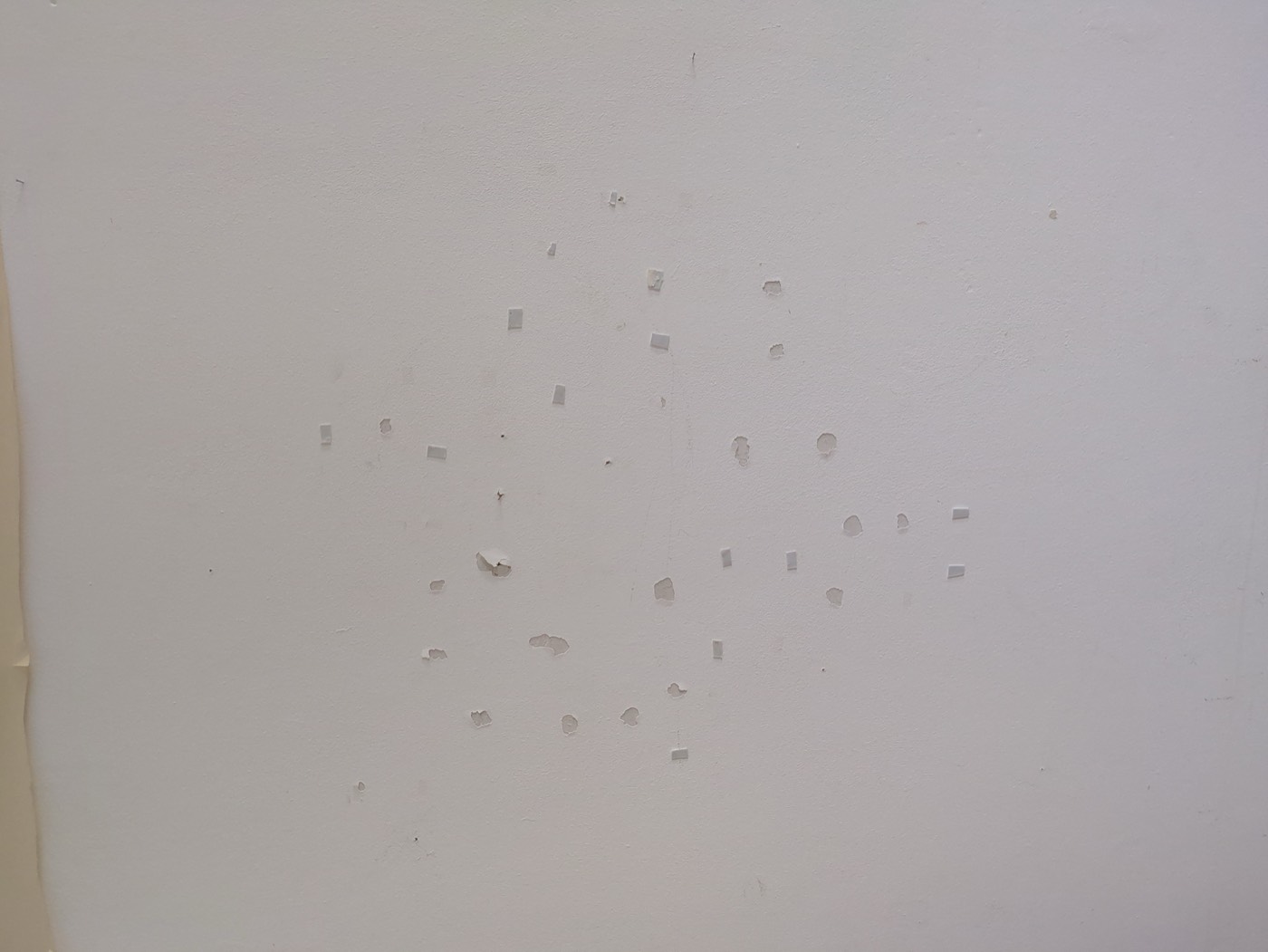
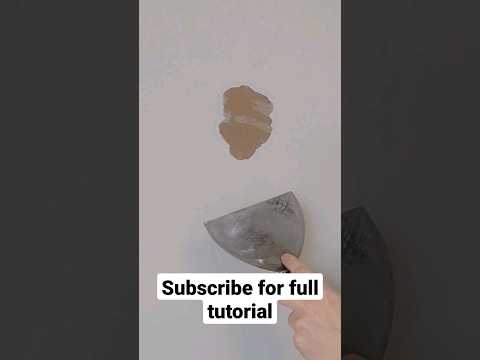
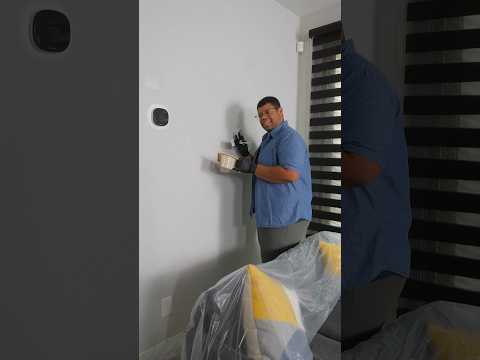
Scrape loose edges
Push a putty knife or scraper under every flaking edge and pop off anything loose. It will look worse before it looks better — that's normal. Feather-sand the hard edges lightly.
Fill with spackle / filler
Swipe filler over each chip with the knife, slightly overfilled. Let it dry fully (check the tub — usually 1–2 h for shallow spots). Use a non-shrink filler so you only need one pass.
Sand smooth & wipe
Light circular passes until you can't feel the edge with your fingertips. Wipe dust off with a barely-damp cloth and let dry. Hit any yellow-brown stains with one coat of stain-block now.
Prime, then paint
Prime the patches (skipping primer causes "flashing" — shiny spots under raking light). Then roll paint corner to corner over the whole wall section, not just dabs — spot-dabbing in a slightly different white is the #1 giveaway. Two thin coats. ▶ Videos up top + full technique in the 🎨 How to paint card.
Repaint the full wall
If the old white has yellowed, no touch-up will match. One full wall, one fresh coat, guaranteed uniform. Often faster than fighting patch-matching.
Scratches & dark marks in the parquet
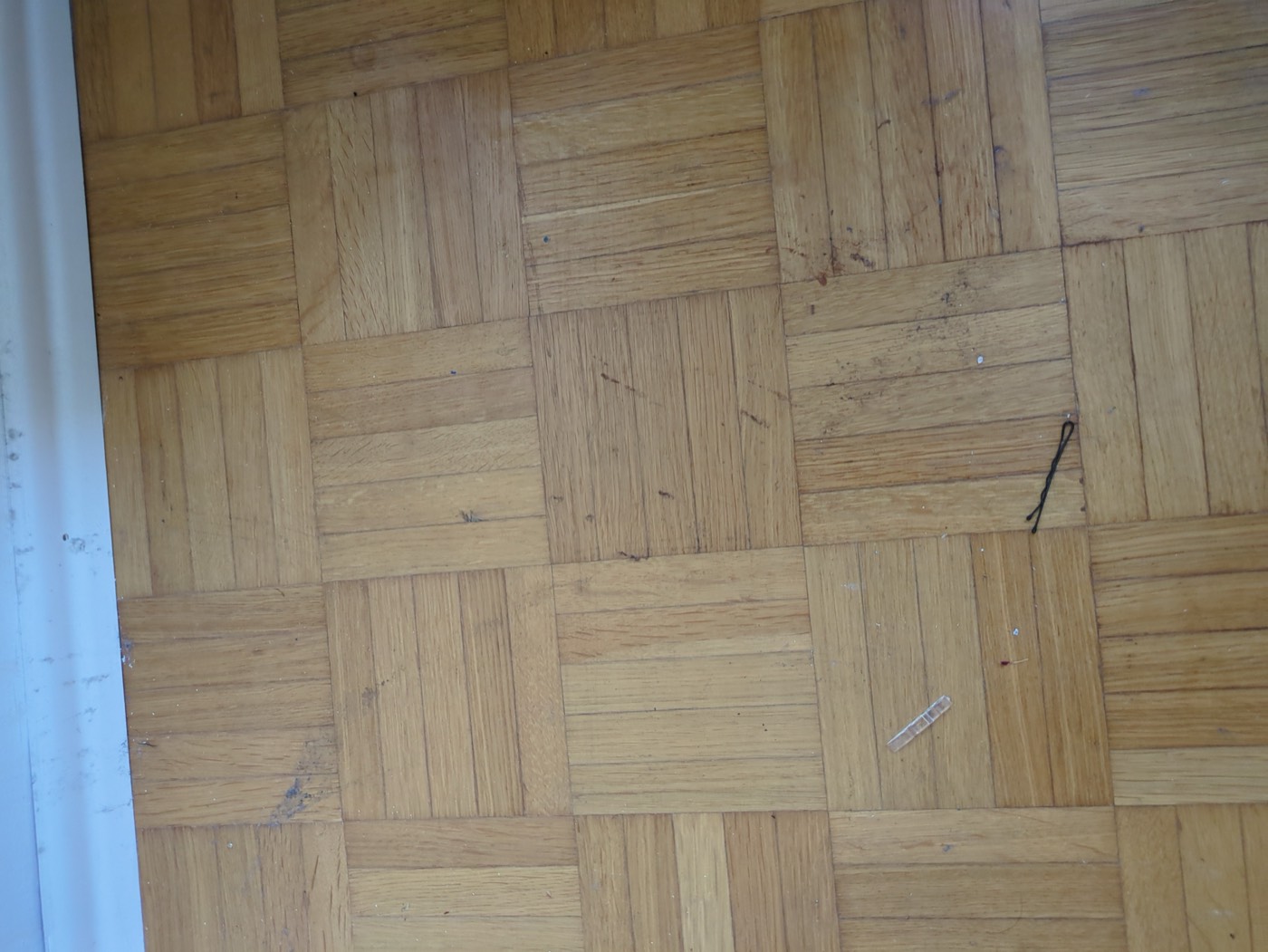
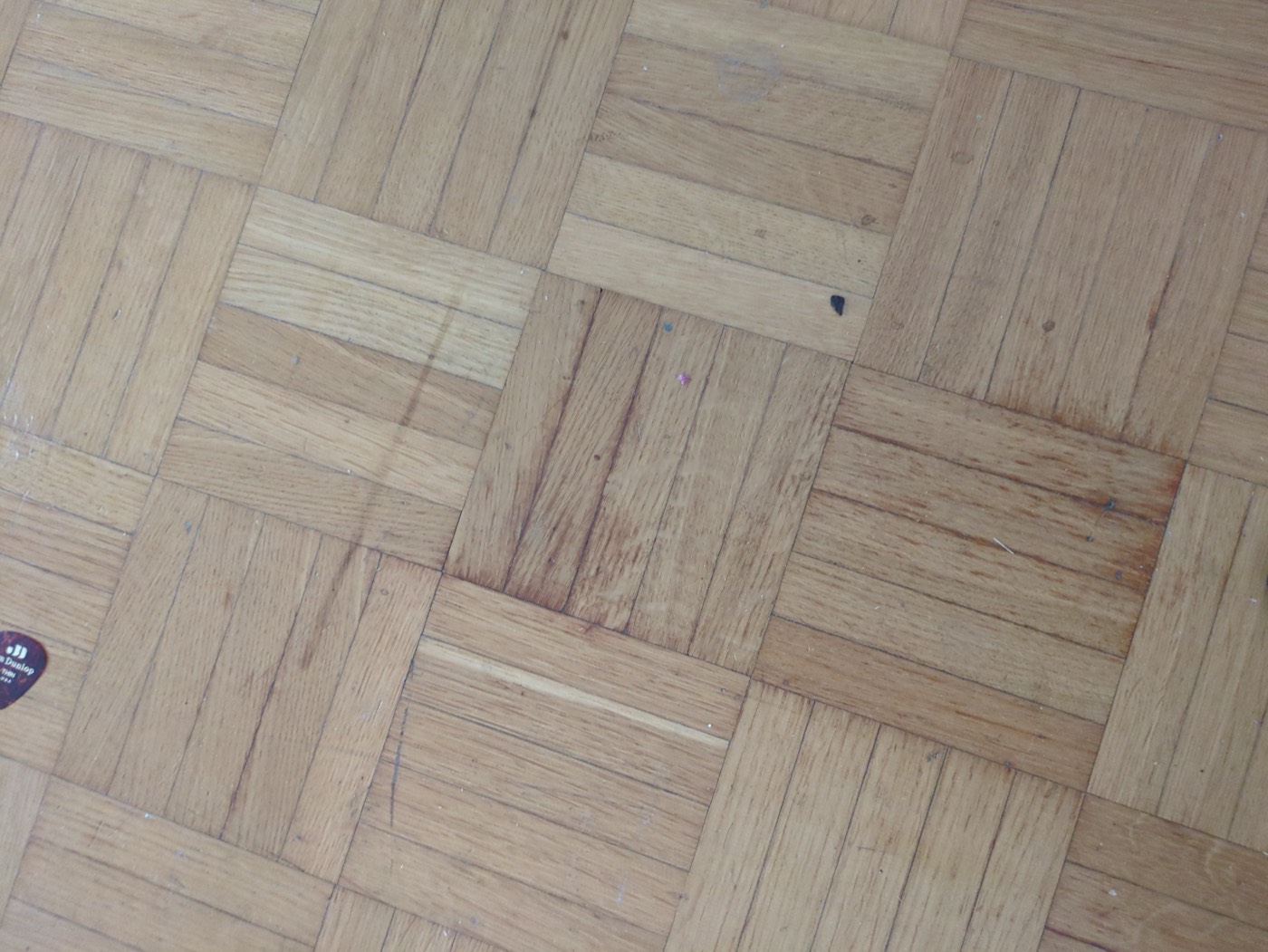
Clean + oil-vinegar blend
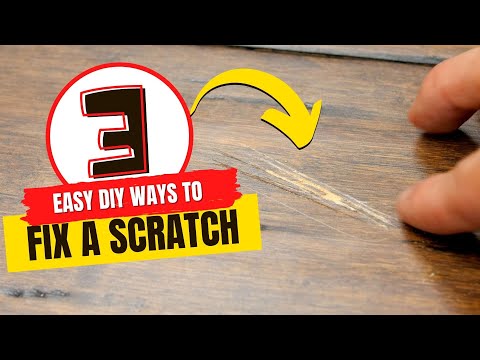
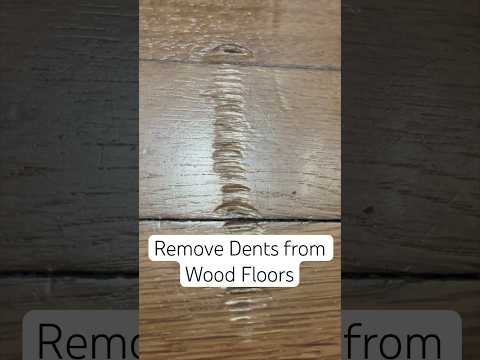
Clean the area, then dab a 50/50 mix of olive oil and (apple cider) vinegar into fine scratches, leave a few hours, buff off. Makes hairline scratches vanish surprisingly often.
Touch-up marker / blend stick
Colour the scratch with a wood-tone marker (buy a multi-shade set, blend two shades — parquet is never one colour), wipe excess across the grain, optionally seal with a whisper of clear paste wax on a cloth. ▶ See the carousel videos up top.
Hard-wax filler stick
Melt matching hard wax into the gouge (kits include a mini heater), scrape flush with the plastic scraper, blend the colour with a marker on top. This is what the pros use for single gouges.
Spot-sand & refinish that patch — or leave it
Sand just the damaged blocks (with the grain, 120→180 grit) and re-varnish. Warning: the new varnish sheen rarely matches aged finish exactly. For normal wear-and-tear in a rental, marks like yours often count as fair wear — check your lease before over-investing.
Pale friction wear where the bed rubbed

Clean the worn strip
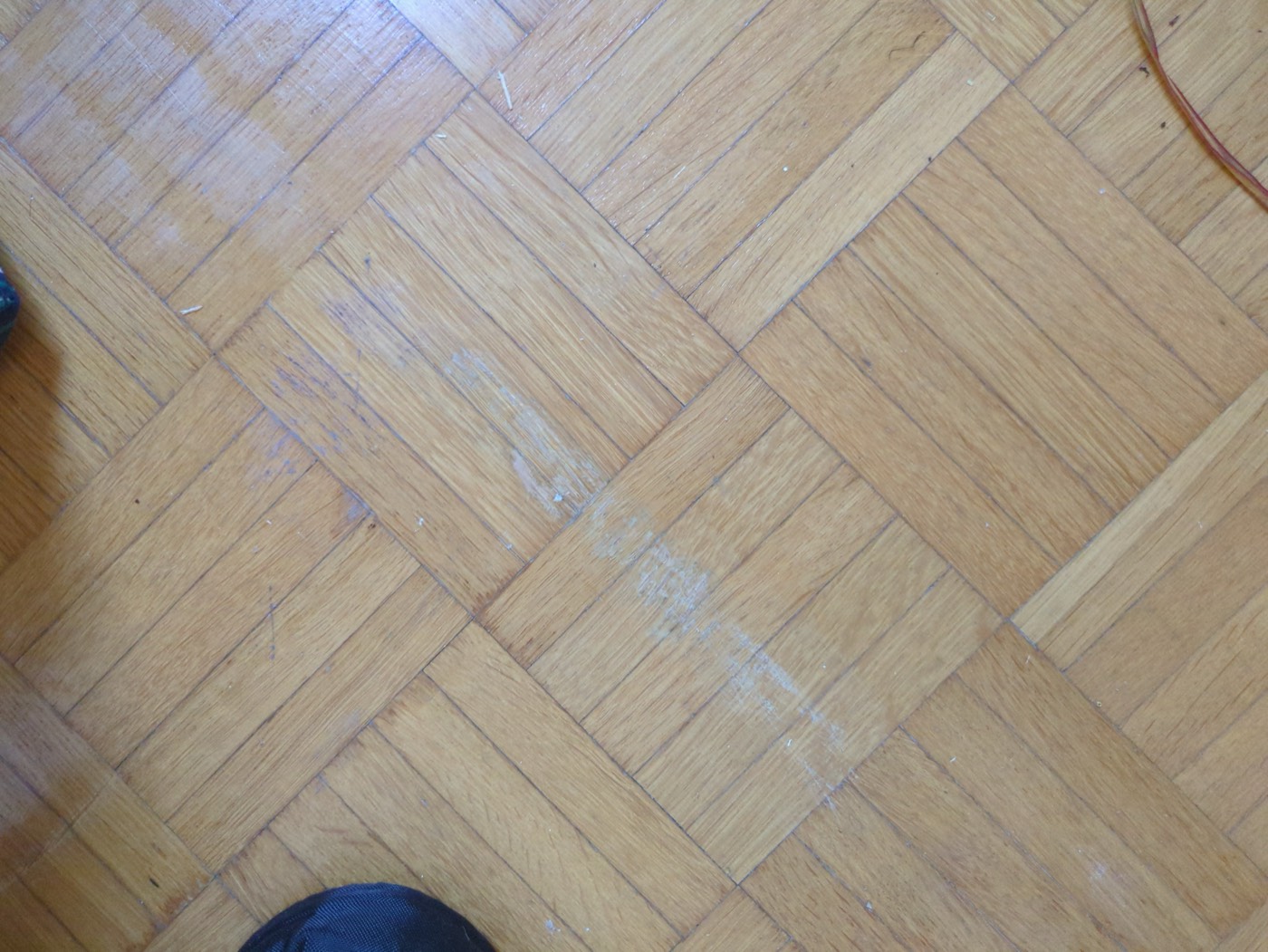
Vacuum then wipe with a barely-damp cloth to get grit and dust out of the abraded area. Let it dry fully — you want bare, clean wood before you re-oil, or the new finish won't key in.
Blend the colour back
Where the abrasion lightened the wood, feather a wood-tone marker along the streak with the grain, blending two shades. Wipe the excess. Light friction wear often needs no colour at all — just the oil in step 3.
Re-oil (oiled floor) or reviver (lacquered)
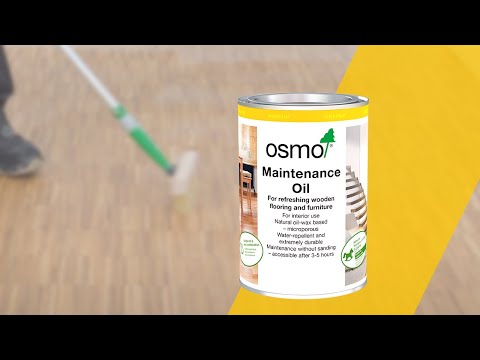
Oiled floor: rub a thin coat of clear/natural parquet maintenance oil (e.g. hard-wax-oil refresher) into the strip with a lint-free cloth, along the grain, feather the edges into the good floor, wipe off excess, let cure. Lacquered floor: use a matte/satin floor "reviver" polish instead — it re-flows a thin sheen over the scuff.
Spot-sand + re-oil — or call it fair wear
Lightly sand the strip with the grain (120→180 grit), then re-oil as in step 3 so the whole block re-seals evenly. Honestly though: furniture-contact wear like this is the textbook example of "fair wear and tear" a landlord normally can't charge for. Check your lease before spending a cent — a quick re-oil is usually all it's worth.
How to paint a wall so no one can tell
Prep & protect first
Fill, sand and dust before you open the paint (see Job 04). Run masking tape along the skirting and any edge you don't want paint on. Lay something on the floor. Stir the paint — never shake.
Prime the bare patches
Raw filler and bare plaster drink paint and dry shiny ("flashing") next to the old matte wall. One thin coat of primer on every filled spot fixes this. Let it dry per the tin.
Cut in the edges with a brush
Before rolling, brush a ~5 cm band into the corners and along the tape/skirting where a roller can't reach. Work in sections so the cut-in is still wet when you roll up to it (that's what hides the join).
Roll in a "W", then fill it in
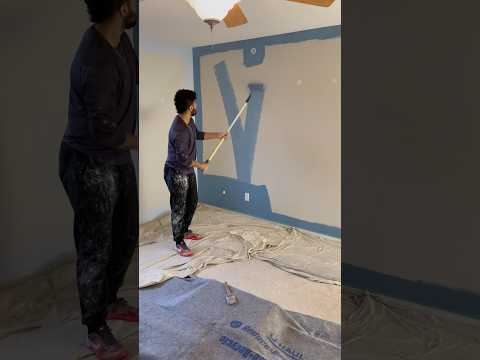
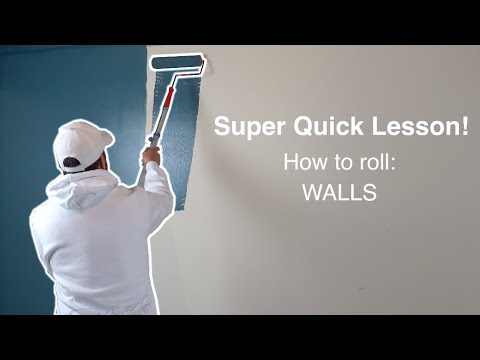
Load the roller evenly (roll off the excess on the tray ramp). Roll a big loose W on the wall, then fill the gaps without lifting — this spreads paint evenly. Paint corner-to-corner across the whole wall section, never just a dab over the patch, or the patch will always show. ▶ Watch the two videos up top.
Two thin coats beat one thick
Thick paint runs, drips and dries blotchy. Do one thin coat, let it dry fully (check the tin — usually 2–4 h), then a second. Two thin coats give a flat, even, streak-free finish.
Keep a wet edge & don't overwork it
Always roll into an area that's still slightly wet, and stop fussing once it's covered — going back over half-dry paint leaves roller marks. Peel the masking tape off while the last coat is still tacky for a crisp line.